
NCLEX® Pharmacology Cheat Sheet: Drug Classifications & Common Meds
Pharmacology can be one of the most intimidating topics on the NCLEX, and for good reason. Between drug classifications, side effects, antidotes, and nursing considerations, it can feel overwhelming to know what to focus on. This NCLEX pharmacology cheat sheet was created to simplify your review and help you concentrate on what the exam actually tests.
Designed by nurse educators, this free resource highlights the high-yield medications, pharmacology drug classification list, therapeutic ranges, toxicity signs, and client teaching points that appear repeatedly on the NCLEX. Instead of memorizing endless drug lists, this pharmacology cheat sheet for nurses helps you recognize the most common red flags and nursing priorities to know, making your NCLEX pharmacology review more efficient and less stressful.
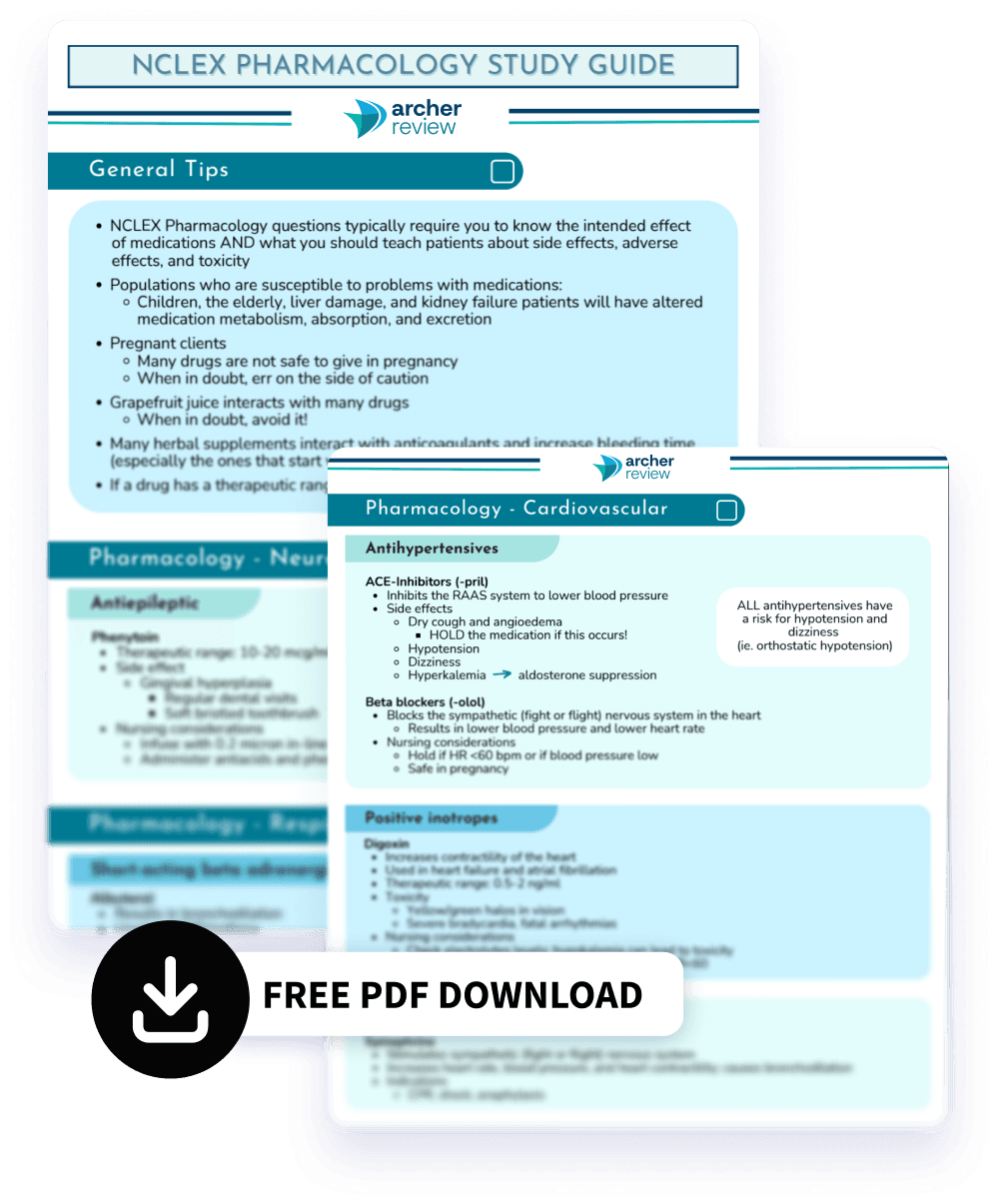
What nursing students need to know to pass pharmacology questions on the NCLEX
How should nursing students review for pharmacology on the NCLEX? Pharmacology questions on the NCLEX rarely ask you to recall obscure facts. Instead, they test whether you understand intended medication effects, safety risks, and nursing priorities. This pharmacology study guide is built to support quick review before exam day or targeted studying while practicing questions.
By organizing medications by system and drug class, this NCLEX pharmacology cheat sheet helps reinforce key pharmacology concepts, especially when paired with practice questions. Understanding how drugs work, who they’re unsafe for, and what to monitor is far more important than memorizing every medication name.

Pharmacology Drug Classification List
Recognizing drug class and name stems helps you recognize shared effects, risks, and nursing priorities. This pharmacology drug classification list helps you quickly identify common suffixes, link drugs to their classes, and apply that knowledge to safety and priority-based NCLEX questions.

Cardiovascular Medications
Cardiovascular drugs are commonly tested on the NCLEX due to their safety implications. This NCLEX pharmacology cheat sheet covers cardiovascular drug classes like antihypertensives, anticoagulants, and cardiac glycosides, emphasizing therapeutic ranges, toxicity signs, and when to hold medications, key details that frequently appear in exam questions.

Mental Health Medications
Questions involving mental health medications often test both knowledge and client safety. This section focuses on CNS depressants, antidepressants, mood stabilizers, and antipsychotics, highlighting adverse effects, toxicity, and critical nursing assessments. These concepts are central to any strong NCLEX pharmacology review.

Gastrointestinal Medications
GI medications are commonly tested in relation to timing, interactions, and client teaching. This pharmacology study guide reviews medications like proton pump inhibitors, H2 blockers, antihyperglycemics, and GI protectants, reinforcing administration timing and safety cues that are common to encounter on exams.

Antibiotics & Anti-Infectives
Antibiotics are a high-yield NCLEX topic. This pharmacology cheat sheet for nurses emphasizes common antibiotic drug classes, adverse effects, pregnancy considerations, and client teaching, such as potential interactions and recognizing signs of toxicity.

Pain Management & Non-Opioid Analgesics
Pain management questions often test safety, antidotes, and contraindications. This section of the free PDF NCLEX study guide reviews both opioid and non-opioid analgesics, focusing on overdose risks, toxicity, and nursing monitoring, key knowledge for both RN and PN students
Common NCLEX Drug Stems & Suffixes
Recognizing common NCLEX drug stems is one of the fastest ways to eliminate wrong answers and identify nursing priorities. The NCLEX frequently tests medications by class using familiar suffixes such as -pril (ACE inhibitors), -olol (beta blockers), -statin (cholesterol medications), -sartan (ARBs), -prazole (PPIs), and -dipine (calcium channel blockers). The pharmacology drug classification list included in this study guide organizes high-yield prefixes and suffixes and their class alongside common medication examples, helping you quickly identify medication classes and apply that knowledge during NCLEX-style questions.

Printable Pharmacology Cheat Sheet for Nurses

This printable pharmacology cheat sheet for nurses is available as a downloadable PDF, making it easy to study at home, during breaks, or while reviewing missed questions. Many students use this pharmacology PDF as a quick reference alongside practice exams or as a last-minute drug chart for NCLEX review.
You can download and print the study guide for offline use or keep it saved on your device for fast access during study sessions.
Final NCLEX Pharmacology Review Tips for Nursing Students
The key to pharmacology success isn’t memorization, it’s understanding drug classifications, safety risks, and nursing priorities. Focus on why medications are given, what can go wrong, and how to intervene. This approach prepares you for scenario-based questions and supports long-term retention far better than rote memorization.
Using a targeted NCLEX pharmacology cheat sheet alongside practice questions and deeper content review helps reinforce these concepts and builds confidence leading into exam day.
Archer Review’s Pharmacology Crash Course
If you’re looking for a deeper, more structured approach to pharmacology, Archer Review’s Pharmacology Crash Course offers in-depth instruction designed to walk you through medication classes, mechanisms of action, nursing considerations, and NCLEX-style application step by step.
The free NCLEX pharmacology cheat sheet on this page works as a helpful companion to the crash course, giving you a quick-reference summary of high-yield drugs and concepts while the course itself provides the detailed explanations, examples, and exam strategy behind them. Many students use this pharmacology study guide to reinforce what they’ve learned in the course or as a fast review tool between lessons.
Need One-on-One Support?
Some students benefit from personalized instruction, especially if pharmacology has been a recurring challenge. Archer Review offers access to private NCLEX tutors for students who want individualized help reviewing medications, clarifying difficult concepts, or walking through NCLEX-style questions step by step.
Working with a private tutor can be especially helpful if you’re preparing for a repeat NCLEX attempt, struggling with specific drug classes, or feeling stuck despite studying on your own. Sessions are tailored to your needs, helping you focus on high-yield content and build confidence in your clinical judgment.
FAQ on Pharmacology NCLEX Questions
Below are answers to common questions students have about pharmacology on the NCLEX.
How Much of the NCLEX is Pharmacology?
Pharmacology is a significant portion of the NCLEX. The test plan category Pharmacological and Parenteral Therapies, which falls under Physiological Integrity, accounts for approximately 13–19% of exam items. The NCLEX emphasizes safe medication administration, clinical judgment, and client safety across a range of pharmacology-related scenarios.
Do I Need to Know Every Drug for the NCLEX?
No, you do not need to memorize every medication. The NCLEX focuses on high-yield drug classes, common medications, and safety-related concepts. Understanding drug classifications, expected effects, major side effects, and nursing priorities is far more important than recalling isolated drug names.
What Drug Classes Appear Most Often?
The NCLEX frequently tests on drug classes that are commonly tied to patient safety, priority interventions, and clinical judgment scenarios, such as cardiovascular medications, antibiotics, central nervous system drugs, and analgesics, which is why they receive greater emphasis during pharmacology review.
Are Brand Names on the NCLEX?
The NCLEX primarily uses generic medication names rather than brand names. Focusing your study on generic names, common suffixes, and drug classes is the most effective strategy for exam preparation.
Archer Review's NCLEX Study Guides
Looking for more free resources? Archer Review offers a growing collection of free NCLEX study guides designed to support nursing students across commonly tested exam topics. Each guide is created by experienced nurse educators and focuses on high-yield concepts, clinical priorities, and exam-ready thinking, making them helpful whether you're early in nursing school or actively preparing for the NCLEX.
NCLEX Med-Surg Cheat Sheet
This focused guide covers major body systems, high-risk conditions, and priority nursing interventions frequently tested on the NCLEX. Topics include cardiovascular, respiratory, neurological, renal, gastrointestinal, and endocrine systems, with emphasis on recognizing complications, connecting assessment findings with appropriate nursing actions, and prioritizing care.
NCLEX Pediatrics Study Guide
This study guide reviews growth and development milestones, age-specific assessment findings, pediatric safety considerations, and common childhood conditions tested on the NCLEX. It emphasizes recognizing normal versus abnormal findings, respiratory and cardiac concerns, and early signs of deterioration. The guide helps students apply developmental knowledge directly to prioritization and safety-focused pediatric exam questions.