
Free NCLEX Pediatrics Cheat Sheet & Pediatric Nursing Study Guide
Pediatric nursing requires specialized knowledge, as care must be adapted to age-specific developmental, physiological, and safety needs. From infancy through adolescence, nurses must understand growth and development, age-specific assessments, and unique safety risks, concepts that are commonly tested on the NCLEX.
This pediatric nursing study guide provides clear, high-yield pediatric nursing information to help you quickly recognize milestones, red flags, and priority nursing actions. Designed as a concise cheat-sheet style resource, it focuses on what you’re most likely to see in pediatric NCLEX questions, making studying more efficient and less overwhelming.
Pediatric Nursing Education & Responsibilities
Pediatric nursing focuses on caring for clients from birth through adolescence, with an emphasis on growth, development, and family-centered care. Pediatric nurses must adjust assessments, interventions, and communication based on a child’s age and developmental stage. This requires strong pediatric nursing skills, including recognizing subtle signs of deterioration, supporting caregivers, and maintaining a safe environment.
Because pediatric clients can decompensate quickly, pediatric nursing education places heavy emphasis on early recognition of complications, trend monitoring, and prioritization, skills that are consistently tested on the NCLEX.

Roles and Responsibilities of Pediatric Nurses

Settings and Career Paths
Growth & Development Milestones for the NCLEX
Growth and development milestones are high-yield NCLEX content. Questions often test whether a child’s behavior, reflexes, or abilities are appropriate for their age. This NCLEX pediatric cheat sheet simplifies reflexes and developmental milestones, helping you quickly recognize what is expected, and what signals concern.
Understanding these expected findings is critical for answering pediatric NCLEX questions, especially those involving safety, delayed development, or parent education.

Infant & Toddler Milestones
The NCLEX frequently tests infant and toddler milestones such as reflexes, gross and fine motor development, and early psychosocial stages. This pediatric nursing study guide highlights age ranges and expected findings so you can quickly identify normal versus abnormal development.

Preschool & Above Development
For preschool-aged children and up to adolescence, NCLEX questions often focus on cognitive development, social behaviors, and independence. Recognizing Erikson, Piaget, and other age-appropriate behaviors helps you answer questions related to safety, communication, and client education confidently.
Common Pediatric Conditions and Nursing Interventions
Pediatric NCLEX questions commonly test recognition of serious conditions and priority interventions. This pediatrics nursing study guide covers high-yield pediatric conditions such as neonatal complications, gastrointestinal disorders, and congenital heart defects.
Understanding pediatric nursing care for conditions like bronchiolitis, croup, pyloric stenosis, congenital heart defects, and jaundice is critical because pediatric clients can deteriorate rapidly. This NCLEX pediatrics cheat sheet emphasizes hallmark signs, key assessments, and nursing considerations.
Essential Pediatric Nursing Skills & Certifications
Strong pediatric nursing skills go beyond technical tasks. Pediatric nurses must understand developmental needs, provide emotional support, and recognize early signs of distress. Pediatric nursing education emphasizes empathy, play, family involvement, and communication, all of which influence safe and effective care.
This guide reinforces those core pediatric nursing skills by highlighting developmental knowledge, high-yield NCLEX tips, and exam-relevant nursing priorities.


Pediatric Nursing Exam Strategies

Success with pediatric NCLEX questions comes from focusing on age, safety, and priority. Always consider things like the child’s developmental stage, airway and respiratory status, and potential for rapid deterioration.
Using a focused pediatric nursing study guide alongside practice questions and comprehensive content review helps reinforce patterns and improves confidence on exam day.
Pediatric NCLEX Practice Questions
One of the best ways to prepare for pediatric NCLEX questions is consistent practice. Archer Review offers access to a large bank of NCLEX-style questions that allow you to apply pediatric nursing concepts in realistic scenarios. Practicing questions alongside a high-yield study guide and content review helps solidify understanding and improve clinical judgment. Reviewing rationales, especially for missed questions, strengthens your ability to recognize age-specific priorities, safety concerns, and early signs of deterioration in pediatric clients.
What to Know for Pediatrics on the NCLEX
Pediatric NCLEX questions commonly focus on growth and development milestones, age-appropriate assessment findings, medication safety, and recognizing early signs of deterioration. Many questions require you to identify what is normal versus abnormal for a specific age group or determine the safest nursing action in acute scenarios. Airway, respiratory distress, congenital heart defects, and infection risks are frequently tested because children can decline quickly. Understanding expected versus unexpected findings and prioritizing safety are critical skills the NCLEX heavily evaluates in pediatric scenarios.

Free Pediatric NCLEX Study Guide

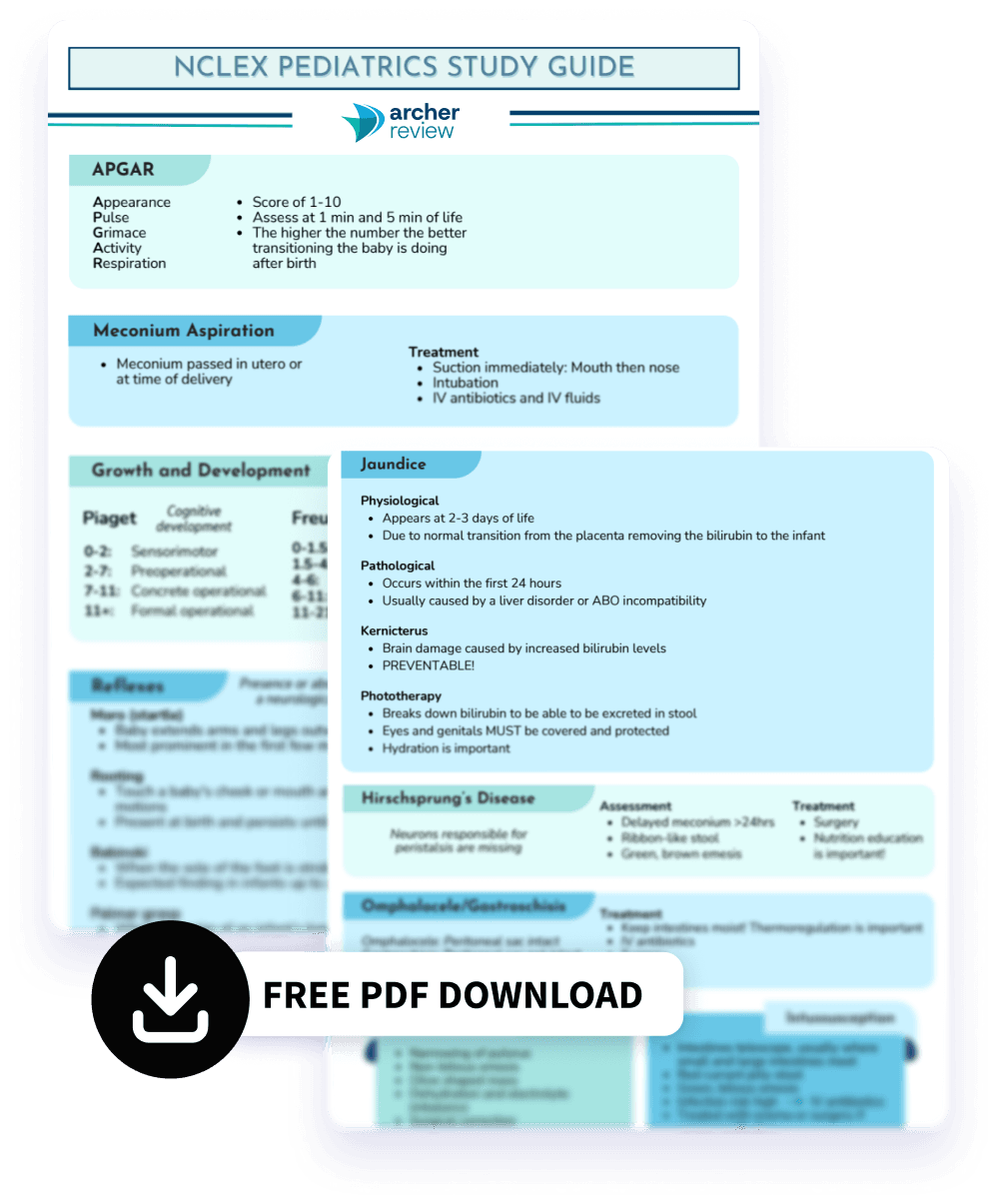
This free pediatric nursing study guide is designed as a high-yield reference for nursing school and NCLEX prep. It includes growth and development stages, reflexes, neonatal and pediatric conditions, and congenital heart defects, all presented in a quick, easy-to-review format.
Students often use this NCLEX pediatric cheat sheet to review missed practice questions or as a final refresher before exams.
FAQ About Pediatrics on the NCLEX
Pediatric NCLEX questions test concepts like safety, developmental knowledge, and clinical prioritization in vulnerable populations. These topics are highly relevant since children can deteriorate quickly, and nurses must recognize subtle changes early. Understanding how pediatrics appears on the NCLEX helps reduce anxiety and improve test-day confidence.
Is Pediatrics Heavily Tested on the NCLEX?
Pediatrics is consistently tested on the NCLEX, though not as a standalone section. Pediatric scenarios are integrated throughout the exam and often focus on safety, airway and respiratory concerns, growth and development, and recognizing complications. Because children require age-specific care, pediatric questions frequently assess prioritization and early intervention skills.
What Pediatric Topics are Most Tested on the NCLEX?
The most tested pediatric topics include concepts like growth and development milestones, respiratory disorders (such as bronchiolitis and croup), neonatal conditions, and congenital heart defects. Questions commonly require identifying normal versus abnormal findings for specific age groups and choosing the safest nursing intervention.
What Should I Study First for Pediatrics on the NCLEX?
Start by reviewing growth and development milestones, as many pediatric questions depend on knowing what is age-appropriate. Next, focus on common pediatric conditions and safety priorities. Mastering these foundational concepts makes it easier to answer more complex scenario-based NCLEX questions.
Does the NCLEX Test Pediatric Medication Administration?
The NCLEX can present pediatric medication-related questions. Medication safety is commonly tested through scenario-based questions that assess clinical judgment and safe nursing decision-making.
Archer Review’s NCLEX Study Guides
Looking for more free resources? Archer Review offers a growing collection of free NCLEX study guides designed to support nursing students across commonly tested exam topics.
NCLEX Pharmacology Cheat Sheet
This high-yield overview organizes commonly tested drug classes, medication suffixes, safety considerations, and priority nursing interventions, highlighting adverse effects and clinical red flags that frequently appear on the NCLEX. Rather than requiring you to memorize every medication, this cheat sheet simplifies complex material and helps you recognize patterns and key takeaways.
NCLEX Med-Surg Cheat Sheet
This focused guide covers major body systems, high-risk conditions, and priority nursing interventions frequently tested on the NCLEX. Topics include cardiovascular, respiratory, neurological, renal, gastrointestinal, and endocrine systems, with emphasis on recognizing complications, connecting assessment findings with appropriate nursing actions, and prioritizing care.